Don’t Tell Me

Don’t Tell Me

Don’t tell me what I can or cunt do
Don’t try to censor me with your personal bias
I am not your mouth piece and never claimed it
I don’t crave your acceptance or require it
Try stifling my speech and see what a territorial bitch I can be
Try throwing archaic values you’ve placed upon locution I feel empowered by
Sisters in solidarity is what we should be
Instead the use of one term divides us
Disagree with me and shame me down
Shame on you for censoring my language
I reclaim the noun – the verb – the word
I use it proud and loud
For I am the CUNT who takes it back and brings it to the fore
For I am the CUNT who refuses to bend to your fickle contempt
For CUNTS everywhere –
I seize and celebrate whilst waving your policing views adieu

 (C) T. Altman 2017


Remedy

Remedy

Stumbling preeminent neediness
Into stony seas of logical distress
Exploring with detected trepidation
Analyzing abysmal wretchedness
Commanding intelligent selflessness

For what purpose, point and pine

For the tumbling truth
For the painful promise
For the rhyming ridicule
For the salacious savvy
For the remedy of writing

Resolutely the enormity is me

 (c) T. Altman 2017


Allotrope

Honey soaked, troubled notes

Pierced within cracking walls

Unreleased burdens, build and topple

Foraged for tranquil peace

Regarded as flotsam – inestimable instead

Paragon of the genetrix cue

Lumbered pressure allotropes does make

Verse (c) T. Altman 2017

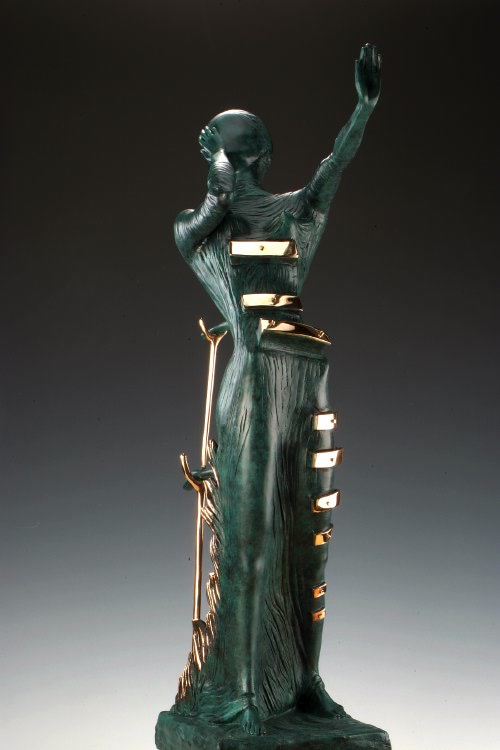
(Image: Woman Aflame by Dali)


Poetry Writing Style

rose-764267_1920

I was around 21 when I showed a friend some of the poetry I had written up to that point.  We were planning on attending a poetry reading group and I wanted some feedback on my work before going “public”with it.  It was a huge deal for me, as before this I had never shown anyone my poetry.

This friend was very focused and silent, whilst she looked through my notebook of handwritten poems…mostly in neat print which at times became cursive.  After what seemed like an eon, she looked up at me and said “you write like Sylvia Plath” to which I replied “Who?“, as I had no idea who Sylvia Plath was at the time.

Like I’ve mentioned before – I wasn’t exposed to the best English literature at the working class public schools I attended growing up.  For the most part and if I am speaking frankly, I don’t ever recall being taught anything about poetry or poets for that matter.  The poets I had been exposed to were the ones I found on my own.  These tended to be poets from the Romantic era  like Byron, Shelley, Keats and Poe, as I had developed an obsession with the Victorian period as a teen.

Soon after, I found myself borrowing my friends copy of her collection of Sylvia Plath’s work and realized that my poetry did resemble her style.  This was completely unintentional and worried me so much I stopped writing for a while.  I was so fearful about not emulating that it made me stop creating any work at all!

Then, I finally read “The Bell Jar”.  I completely resonated and understood where the protagonist was coming from.  Something inside clicked.   I released the expectation and worry I had placed upon myself.

I went back to writing poetry and I write the way I am compelled to.  Whether it be free or rhyme, flowing or constructed, personal or observational –  I don’t care what I sound like. As long as I am getting my feelings out and expressing myself as I feel compelled to, I feel good about it.

Syliva’s style was autobiographical and so is mine and we deal with the same subject matter of depression, disturbances and death.  The older I get the more comfortable I get with my poetry and as long as I personally feel something when I write it, I will keep at it.

If you would like to read some of my work, here are a few poems I have written in the last year:

Poetry by Tina Altman


sylvia-plath
(Image: Sylvia Plath)

“Wear your heart on your skin in this life.”
Sylvia Plath

(c) T. Altman 2017

What Inspires Me: Anne Sexton

A writers life can be a solitary undertaking but it doesn’t mean you are alone…

6633bfb498672ab554658b7c09905b2b

A Witch’s Life

When I was a child
there was an old woman in our neighborhood whom we called The Witch.
All day she peered from her second story
window
from behind the wrinkled curtains
and sometimes she would open the window
and yell: Get out of my life!
She had hair like kelp
and a voice like a boulder.

I think of her sometimes now
and wonder if I am becoming her.
My shoes turn up like a jester’s.
Clumps of my hair, as I write this,
curl up individually like toes.
I am shoveling the children out,
scoop after scoop.
Only my books anoint me,
and a few friends,
those who reach into my veins.
Maybe I am becoming a hermit,
opening the door for only
a few special animals?
Maybe my skull is too crowded
and it has no opening through which
to feed it soup?
Maybe I have plugged up my sockets
to keep the gods in?
Maybe, although my heart
is a kitten of butter,
I am blowing it up like a zeppelin.
Yes. It is the witch’s life,
climbing the primordial climb,
a dream within a dream,
then sitting here
holding a basket of fire.